Understanding Mizaj: The Unani Approach to Digestive Wellness
A practical introduction to Mizaj (temperament) and digestive fire in classical Unani medicine, plus everyday habits that support comfortable digestion.
Digestion is the foundation of health in Unani medicine. Before any herbal formulation is considered, a Tabib looks at how the body is processing food, fluids, and daily routine. The two ideas that anchor that assessment are Mizaj (temperament) and Quwwat-e-Hazima (digestive capacity).
What Mizaj actually means
Mizaj is usually translated as "temperament". It is not a personality test and it is not a diagnosis. It is a framework for describing the balance of qualities in a person: heat, cold, moisture, and dryness. A person with a predominantly warm and dry constitution may tolerate dry, spicy food poorly. A cold and moist constitution may feel heavy after cold drinks or late meals.
In classical practice the assessment is made from a combination of pulse, tongue, digestion history, sleep, and seasonal patterns. Two people eating the same meal can have very different digestive experiences because their starting balance is different.
Digestive fire and why it matters
The tradition describes digestion as a cooking process that depends on a healthy "fire". When that fire is weak, food is not fully processed. The classic signs described in Unani texts are:
- A heavy, bloated feeling that lasts for hours after eating
- Sour taste, belching, or a sensation of burning after meals
- Loose stools in the morning or an irregular bowel routine
- Mental dullness and low energy after eating
None of these signs is specific to one condition. They are signals to review routine and, where they persist, to consult a qualified physician.
Four habits that support comfortable digestion
1. Eat at consistent times. The tradition gives the stomach a window rather than an all-day grazing pattern. Three settled meals generally suit digestion better than continuous snacking.
2. Drink according to thirst, not habit. Large volumes of cold water immediately before or during a meal are traditionally considered to dampen digestive heat. Small sips of lukewarm water are the gentler choice.
3. Leave a small margin. Stopping slightly before full satiety is one of the oldest recommendations in Unani literature, and it remains practical today.
4. Walk after dinner. A short, easy walk after the evening meal is a simple way to support circulation and bowel regularity.
Where herbal support fits
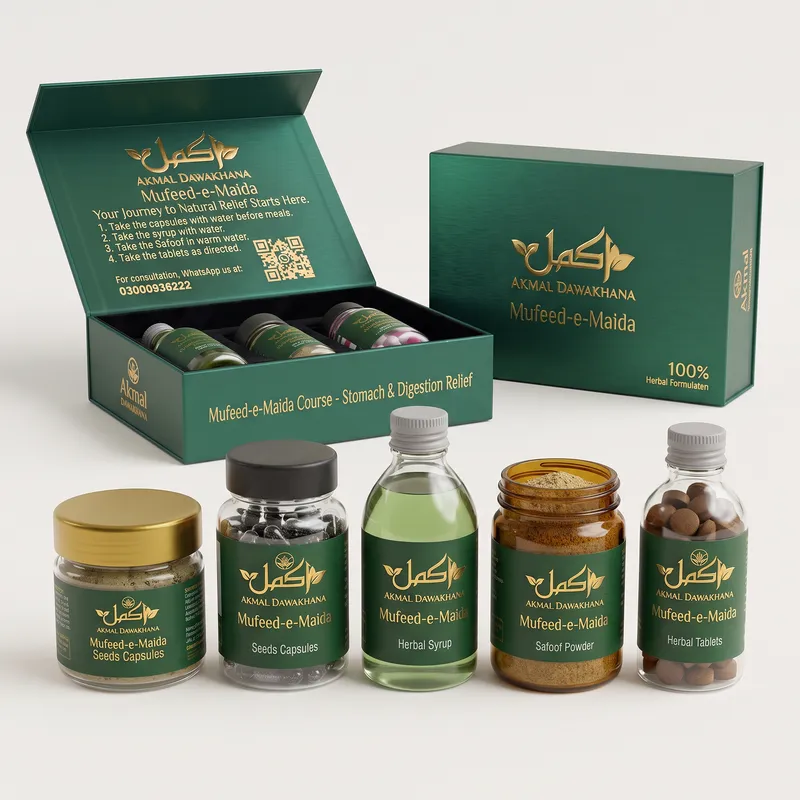
Traditional formulas such as Ajwain, Saunf, Mulethi, and Pudina are used to help soothe occasional burning, trapped gas, and post-meal heaviness. They are dietary supplements, not treatments for disease, and they work best alongside the routine changes above.
Persistent pain, difficulty swallowing, black stools, unexplained weight loss, or fever with abdominal symptoms need medical assessment. Herbal support is not a substitute for that evaluation.
A realistic expectation
Unani practice is gradual by design. The aim of a course is to support the body's own balance over weeks, not to produce an overnight change. If a remedy is not suiting you after a reasonable trial, the correct step is to stop and speak to a qualified practitioner rather than to increase the dose.
Medical disclaimer
This article is educational and describes traditional Unani practice. It is not medical advice. Our products are traditional Unani dietary supplements; they are not intended to diagnose, treat, cure, or prevent any disease. Consult your physician before use. Full disclaimer.
Have a specific health concern?
Share your symptoms and routine with the dispensary team. If your concern needs medical assessment, we will tell you to see a physician first.